Which teat is the right one? – A study on influencing feeding speed in calves
11. Dezember 2025 — Calf feeders, Science — #CalfExpert #Calf Health #MilkBar #Feeding teat
Summary of a study conducted at Kiel University of Applied Sciences, Osterrönfeld campus: Learn which teat promotes health, well-being, and milk intake.
The first weeks of a calf's life are crucial for its later development. This phase determines how healthy, productive, and stress-resistant the future dairy cow will be. It is not only the quantity and quality of the milk that plays a role here, but also the way in which the calf can consume it.
This is because calves have a strong, natural urge to suckle. It not only satisfies hunger, but also has a calming effect and reduces stress. If this need cannot be adequately satisfied, calves quickly display undesirable behaviour, such as mutual suckling.
In addition to the amount of liquid, the speed of feeding is also crucial to how satisfied and balanced a calf is. This is precisely the focus of a recent study, which demonstrates the influence of teat characteristics on calves' feeding behaviour.
This article is about
The study: Three teats in comparison
The study was conducted on a dairy farm in Schleswig-Holstein (250 cows, 210 hectares of agricultural land).
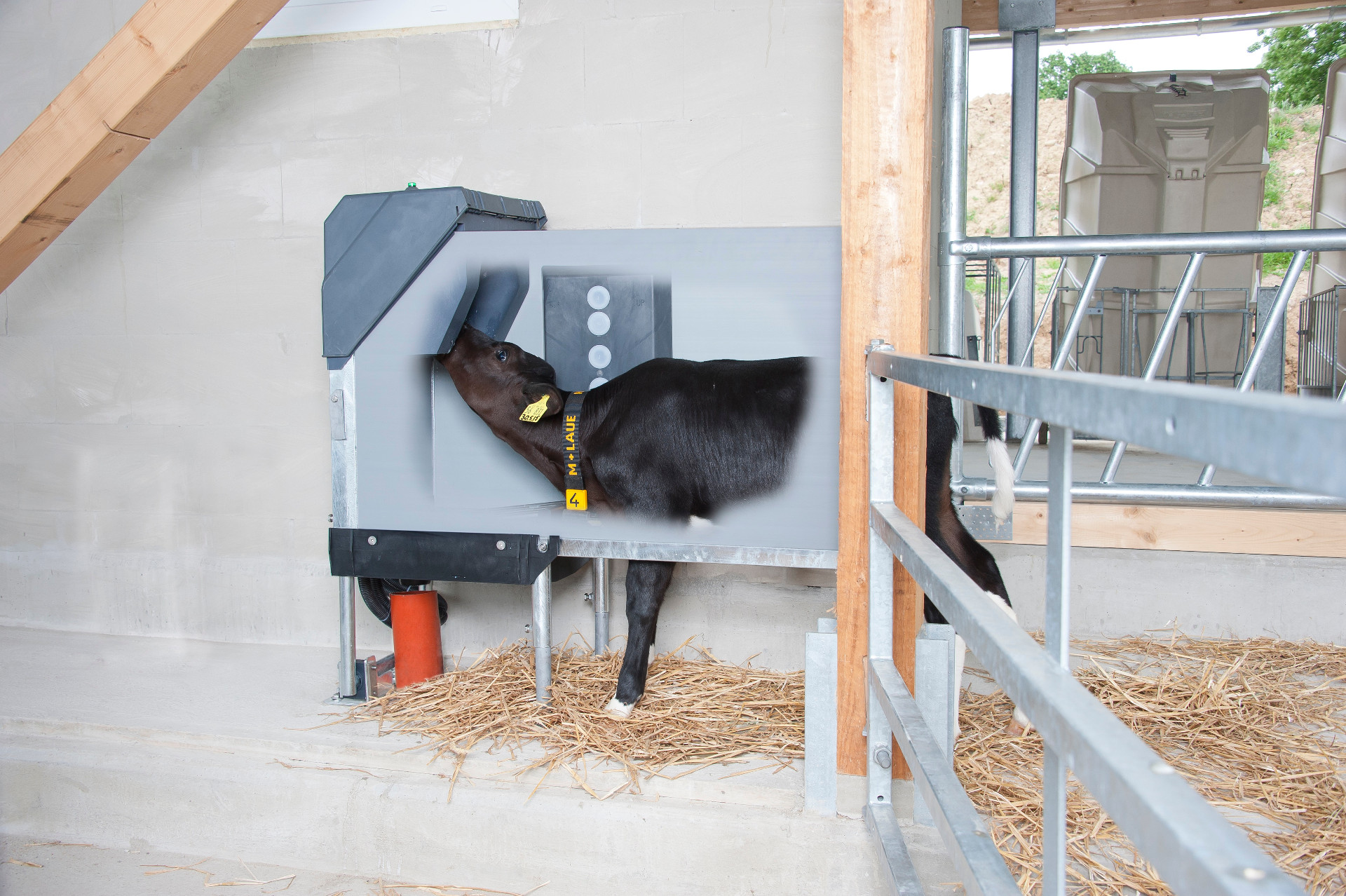
The calves were fed milk replacer via a CalfExpert automatic feeder, allowing every milk intake to be recorded precisely. The aim was to find out how different types of teats affect feeding speed, milk intake and behaviour.
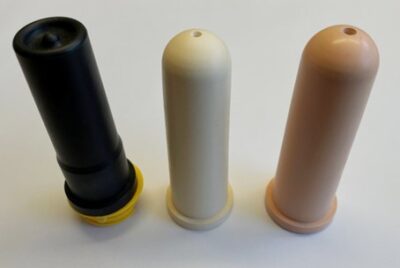
The following were used:
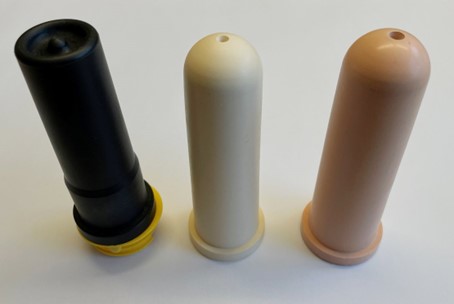
- A PinkTeat teat (3 mm hole diameter) – standard teat, flow rate 500–700 ml/min
- A teat with 2 mm hole diameter – narrower teat, flow rate 300–500 ml/min
- A milk bar teat – shorter teat with cross-slit; according to the manufacturer: slower feeding speed and increased saliva production
Overview of the findings
1. Feeding speed
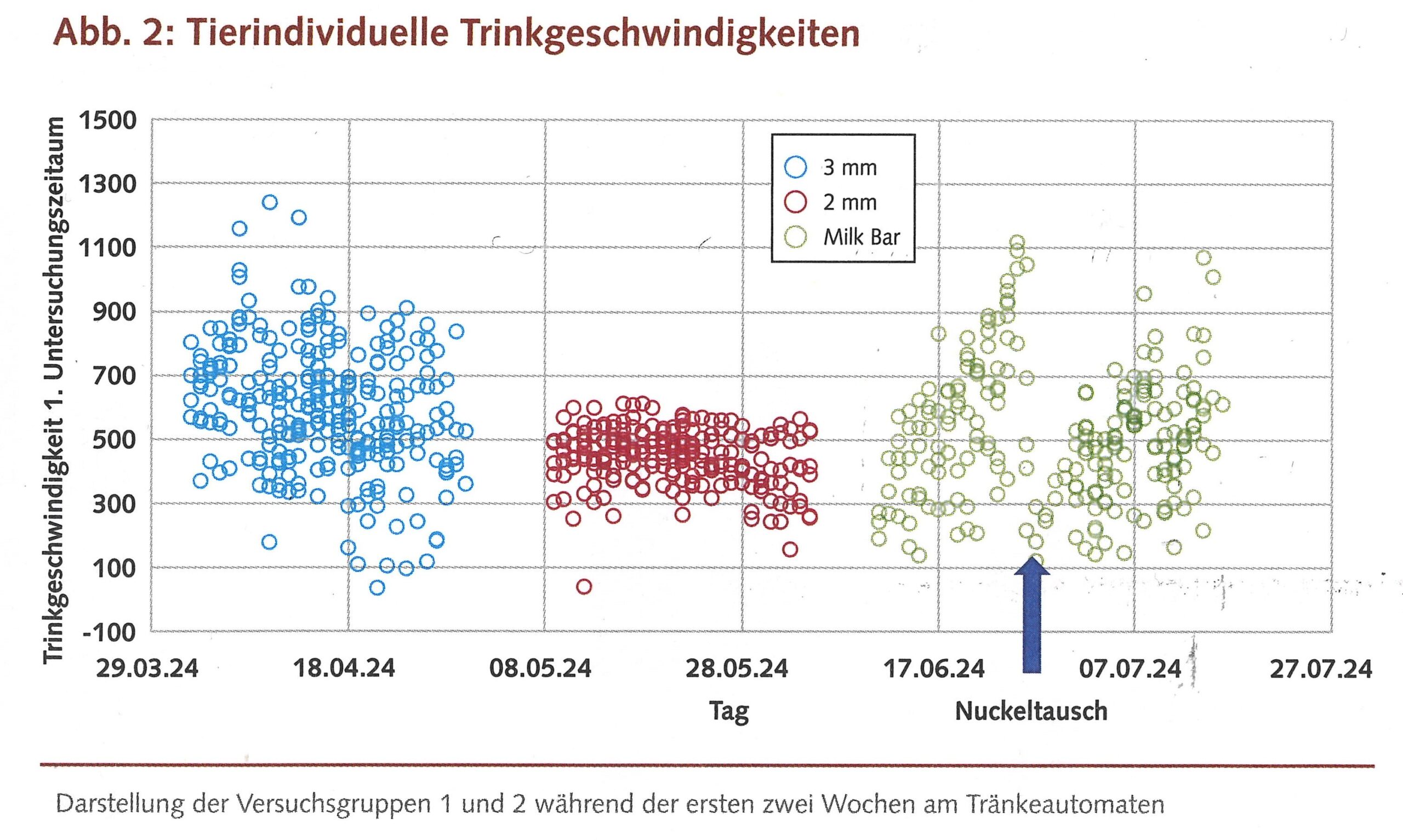
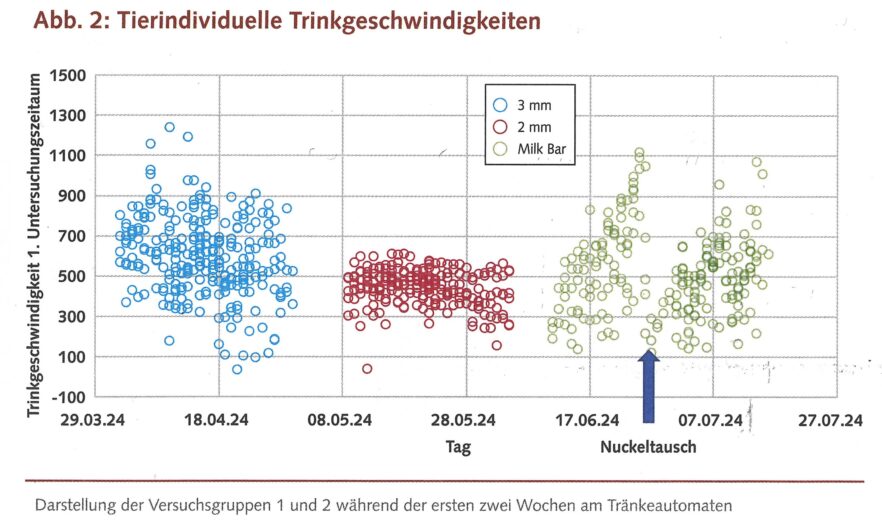
- The calves drank an average of 600 ml/min with the 3 mm teat.
- The flow rate with the 2 mm teat was 444 ml/min. This group showed the least individual differences in feeding speed.
- The milk bar teat also significantly reduced feeding speed, but only when it was replaced regularly. Feeding speeds increased towards the end of the teat's useful life.
2. Duration and frequency of feeding
- Calves with the 2 mm teat spent more time feeding each day (average 21.3 minutes) than calves with the 3 mm teat (average 16.3 minutes).
- At the same time, they had fewer visits without credit to the automated calf feeder – a sign of higher satisfaction and less frustration.
3. Feed intake and milk consumption
- Calves with the 3 mm teat consumed slightly more milk per visit than those with the 2 mm teat.
- Over the entire study period, milk intake among calves with the 3 mm teat was 757 ml higher per day than milk intake among calves with the 2 mm teat.
4. Aborted visits
- Aborted visits were recorded for calves with the 2 mm teat. This phenomenon hardly occurred at all with the other two teats.
5. Behaviour after feeding
- Calves with the 3 mm teat showed significantly more activity after feeding.
- Calves fed with the milk bar teat, on the other hand, were significantly less active after feeding than the other groups.
6. Impact of health
- Regardless of the type of teat, sick calves (e.g. with respiratory infections) fed significantly more slowly (–100 ml/min), consumed almost 1 litre less milk per day and visited the CalfExpert less often.
What does this mean in practice?
The study clearly shows that the teat makes all the difference.
- 3 mm teat: Highest milk intake, but also greater differences between individual calves and more activity after feeding.
- 2 mm teat: Calmer behaviour and more consistent feeding speeds, but lower milk intake. More frequent teat replacement is necessary. Well suited for groups of calves at high risk of mutual suckling.
- Milk bar teat: Calves are calmer, abort their visits less frequently and feed at a slower pace. However, these teats need to be regularly replaced. It is advisable to get them accustomed to this early on, for example when keeping them individually.
Three practical tips for farmers
1. Choose the right teat:
Consider which objectives are most important for your calf group – maximum milk intake or a reduction in undesirable behaviour.
2. Replace teats regularly:
It is particularly important to follow the manufacturer's instructions when using milk bar teats. Worn teats alter the feeding speed and distort the effects. CalfExpert will inform you in good time when a teat needs to be replaced.
3. Observe each calf individually:
Not all calves are the same – character, age and health all play an important role. You should therefore pay attention to any unusual behaviour during feeding and, if necessary, adjust the type of teat or the feeding schedule.
Conclusion: it all comes down to the teat!
The study makes it clear: teats are more than just optional extras. Factors such as feeding speed, amount of milk consumed per visit, frequency of visits to the feeder, aborted visits and activity after milk intake are directly related to the design of the teat.
Calves with the 3 mm teat achieved the highest feeding speed and consumed the largest amount of milk per visit. At the same time, they were more lively after feeding, but also exhibited greater variation in behaviour. The 2 mm teat resulted in more consistent speeds and calmer behaviour after feeding, thereby potentially reducing the risk of mutual suckling. However, there were more instances of aborted feeds – a disadvantage especially for weaker or sick calves, which are in any case less capable.
The results also show that age and individual differences play a major role: while younger calves spend more time at the feeder, their behaviour becomes more similar during the weaning phase. The milk bar teat proved to be particularly soothing, with few aborted feeds and reduced activity – but only when replaced regularly.
Overall, it is clear that the right teat is an important factor in animal welfare and rearing success. Farms should consciously adapt their choice to their management, calf health and objectives.
In practice, this means:
- Consciously controlling drinking speed can improve both the health and well-being of calves.
- A slower teat can help reduce stress and mutual suckling.
- At the same time, it is important to ensure that calves consume enough milk for optimum growth.
A word of thanks to the authors
We would like to thank the authors of the study for their extensive work and for allowing us to present the results in this blog:
Raul Jonathan Preuß and Professor Katrin Mahlkow-Nerge
Kiel University of Applied Sciences, Faculty of Agriculture
Grüner Kamp 11
24783 Osterrönfeld
Germany
E-mail: katrin.mahlkow-nerge@fh-kiel.de
and
Kjara Braun, MSc
Holm & Laue GmbH & Co. KG